




Affiliate disclosure: This article contains affiliate links. If you purchase through these links, I may earn a small commission at no extra cost to you.
Setting up a fish tank involves more decisions than most beginners realize. Beyond the tank itself, you need filtration, aeration, water chemistry maintenance, and regular cleaning tools. The category of "aquarium equipment" is broad enough to cover everything from a $7 roll of airline tubing to a $62 electric gravel vacuum. Getting the right combination of essentials from the start saves you money and prevents fish losses.
This guide covers ten categories of aquarium equipment, from water conditioners and test kits to biological filtration media, air pumps, and cleaning tools. I've included both highly reviewed products with thousands of ratings and newer options worth considering. Whether you're setting up your first freshwater tank or adding equipment to an established setup, there's something here relevant to your needs.
The products here span different equipment categories rather than competing directly with each other, which makes this a useful starting point for anyone building out a complete aquarium equipment list.
Quick Picks
| Product | Best For | Price |
|---|---|---|
| API Freshwater Master Test Kit (B000255NCI) | Most essential purchase for any tank | $35.98 |
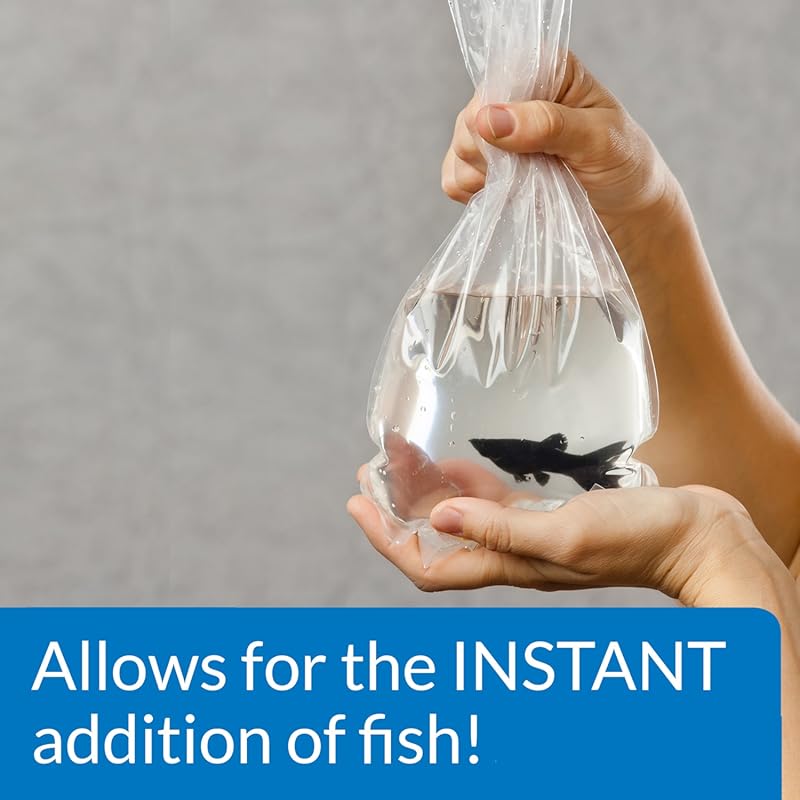
| API Quick Start (B006YG12F6) | Instant tank cycling with live bacteria | $17.38 |
| AQQA 3W Air Pump (B0CG5PRMSD) | Most proven air pump, 1,384 reviews | $27.99 |
| Penn-Plax Airline Tubing 25ft (B0002563MW) | Lowest cost essential, 40K reviews | $6.99 |
| IOAOI Drip Acclimation Box (B0F282GTG5) | Best fish safety accessory | $13.99 |
Individual Product Reviews
API Freshwater Master Test Kit
The most important purchase for any freshwater aquarium keeper, covering ammonia, nitrite, nitrate, pH, and high-range pH in one comprehensive kit.
3 Standout Features: - Tests 5 critical water parameters: pH, high-range pH, ammonia, nitrite, and nitrate - 800 total tests across all parameters provides months of monitoring capacity - 31,003 reviews at 4.8 stars, one of the most validated aquarium products on Amazon
At $35.98, the API Master Test Kit is the single most impactful purchase for a new aquarium keeper. This is not optional. Without accurate water testing, you're flying blind on the nitrogen cycle, the most common cause of new tank fish deaths.
The nitrogen cycle is the process by which aquariums develop the beneficial bacteria that convert toxic ammonia (from fish waste) into nitrite, then less toxic nitrate. This process takes 4 to 8 weeks in a new tank. During that period, ammonia and nitrite can spike to lethal levels without any visible water changes. Fish appear fine until they're not. Liquid test kits like the API kit detect these spikes accurately. Cheap paper test strips don't.
The kit includes 7 bottles of testing solution, 4 test tubes with caps, and a color chart. Ammonia and nitrite tests use two-part reagent systems that take about 5 minutes each. PH and nitrate tests are single-reagent and faster. Results are read by comparing tube color to the chart under white light.
At 31,003 reviews, this is one of the most reviewed aquarium products on Amazon. The 4.8-star average from that population means the kit consistently delivers accurate, reliable results. I'd argue this belongs in the quick picks as the first purchase for anyone setting up a freshwater tank.
Pros: - Tests 5 critical parameters, everything needed for cycle monitoring - 31,003 reviews at 4.8 stars, essentially definitive validation - 800 tests provides over a year of weekly testing capacity
Cons: - Saltwater and reef parameters (calcium, alkalinity, magnesium, salinity) require separate test kits - Color matching requires good white lighting, results can be ambiguous in poor light - Test tubes require washing between uses to avoid cross-contamination
API Quick Start Nitrifying Bacteria
Live nitrifying bacteria in a bottle that jumpstarts the nitrogen cycle and allows immediate fish addition to new aquariums.
3 Standout Features: - Live Nitrosomonas and Nitrobacter bacteria colonize filter media immediately upon addition - Works in both freshwater and saltwater aquariums - 15,077 reviews at 4.8 stars from keepers who have tested it through full tank cycles
At $17.38 for 16 ounces, API Quick Start is one of the most useful products for new tank setup. Adding live nitrifying bacteria to a new aquarium accelerates cycle time from 4 to 8 weeks down to 1 to 2 weeks in many cases, and in lightly stocked tanks can enable immediate fish addition.
The science is straightforward: new tanks lack the bacterial colonies to process ammonia. These bacteria come from the bottle already established and ready to colonize your filter media. The "Quick Start" name is accurate for most applications. The key word is "most": heavily stocked tanks still spike ammonia faster than bottled bacteria can handle, so don't add 20 fish to a 29-gallon tank on day one regardless of how much Quick Start you add.
For reef setups, this product supports the bacterial component of cycling. The more demanding aspects of reef cycling (establishing coralline algae, appropriate nutrient levels for coral) still take time.
15,077 reviews at 4.8 stars is outstanding validation. This is the de facto standard recommendation for new tank cycling in the hobby. API also makes a version that includes dechlorinator, sold separately.
Pros: - 15,077 reviews at 4.8 stars, the most validated tank cycling product available - Works freshwater and saltwater - Accelerates nitrogen cycle from weeks to days in lightly stocked setups
Cons: - No guarantee of instant fish addition in heavily stocked tanks - Shelf life matters: check expiration dates, live bacteria have limited viability - 16oz bottle may be more than needed for small tanks
API Stress Coat Water Conditioner
A dual-action water conditioner that neutralizes tap water chlorine and chloramine while coating fish with an aloe vera protective layer.
3 Standout Features: - 38,077 reviews at 4.8 stars, the single most reviewed aquarium product in this roundup - Removes chlorine, chloramine, and heavy metals from tap water - Aloe vera formula helps restore fish slime coat damaged by handling, injury, or disease
At $10.98 for 16 ounces, Stress Coat is a foundational water conditioner for freshwater tanks. No fish keeper should add tap water to a tank without first neutralizing chlorine and chloramine. Chlorine kills the beneficial bacteria you're trying to establish; chloramine is even more persistent and toxic.
The aloe vera component addresses a secondary need. Fish slime coat (the mucous layer covering fish scales) provides protection against pathogens and mechanical damage. Netting, transporting, or fighting can degrade this layer. Stress Coat helps rebuild it, which can improve recovery after stressful events.
38,077 reviews at 4.8 stars is the highest review count in this entire roundup. That's not a coincidence: Stress Coat has been a hobbyist staple for decades. It works, it's affordable, and every freshwater tank setup needs it.
For saltwater tanks, use Stress Coat for tap water neutralization in water change water but note that the slime coat formula is designed for fish with scales. Reef keepers typically use SeaChem Prime instead for broader chemical coverage.
Pros: - 38,077 reviews at 4.8 stars, the most validated aquarium product here - Dual function (dechlorinator + slime coat repair) at $10.98 - One capful treats 10 gallons, extremely cost-effective
Cons: - Freshwater fish focused, not the optimal choice for reef tanks - Aloe formula may slightly cloud the water temporarily after dosing - No phosphate removal, not a complete conditioner for problem tap water
Fluval BioMax Biological Filter Media
Premium ceramic biological filtration media with a complex porous surface for beneficial bacteria colonization, compatible with Fluval filter series.
3 Standout Features: - Porous ceramic structure maximizes surface area for beneficial bacteria housing - Compatible with Fluval 106 through FX6 filter series and most canister filter baskets - Works in both freshwater and saltwater applications for versatile use
At $12.19 for 500g, Fluval BioMax is a well-priced biological media with 7,868 reviews at 4.8 stars. The product delivers what biological media needs to do: provide enormous surface area for beneficial bacteria to colonize. Those bacteria (Nitrosomonas and Nitrobacter, same as what comes in API Quick Start) need a permanent home on filter media to establish stable colonies.
The complex pore structure of BioMax creates more surface area per gram than simple ceramic rings or foam sponge. More bacteria means more stable processing of ammonia and nitrite. For any canister filter with a biological media basket, BioMax is a reliable choice.
Replacing half the media at a time (as the product recommends) is important: replacing all biological media simultaneously destroys your bacterial colony and essentially recycles the tank. Replacing half maintains the colony while refreshing filter capacity.
The 500g pack is sufficient for most HOB (hang-on-back) filters and smaller canister filters. Larger canisters (Fluval FX5, FX6) may need two packs.
Pros: - 7,868 reviews at 4.8 stars, well proven in the hobby - Complex pore structure maximizes bacterial surface area per gram - Freshwater and saltwater compatible
Cons: - Fluval-brand media priced slightly above generic ceramic alternatives - Replace monthly recommendation may be unnecessarily frequent for established tanks - 500g may be insufficient for large canister filters
Penn-Plax 25ft Aquarium Airline Tubing
Standard 3/16-inch clear airline tubing compatible with air pumps, airstones, undergravel filters, and decorative ornaments.
3 Standout Features: - 40,177 reviews at 4.6 stars, the most reviewed product in this roundup - 25-foot roll provides ample tubing for multiple tanks or complex layouts - 4mm inner diameter fits standard aquarium airline fittings universally
At $6.99 for 25 feet, this is the lowest-cost essential in the roundup and also the most reviewed product here. Airline tubing is about as unglamorous as aquarium equipment gets, but it fails more often than people expect. Cheap tubing cracks with age, pinches at bends, and loses air pressure through pinholes. Penn-Plax's clear flexible tubing resists kinking better than rigid alternatives.
The 3/16-inch (4mm ID) size is the universal standard for aquarium air connections. It fits air pump outlets, airstone stems, gang valves, and check valves universally. You don't need to size-match, you just cut it to length and push it on.
A 25-foot roll handles three to four tanks with airstone connections, or one tank with a complex airstone layout including a bubble bar, sponge filter, and decorative ornament. Keep a roll on hand: airline tubing is the kind of thing you'll need unexpectedly at 10 PM on a Sunday when you can't run to the store.
40,177 reviews confirms this is what hobbyists actually buy when they need airline tubing. It's earned that status.
Pros: - $6.99 for 25 feet, exceptional value - 40,177 reviews at 4.6 stars, most reviewed product in this roundup - Flexible clear construction resists kinking and blends into aquascapes
Cons: - Standard tubing, not saltwater-rated dosing tubing (different product for chemical dosing) - Clear color yellows over time with UV exposure - No connectors or fittings included
IOAOI Drip Acclimation Container
A compact hanging acclimation box for safely transitioning fish, coral, and invertebrates to new aquarium water using slow drip method.
3 Standout Features: - Hangs on the tank rim at 5-1/8" x 2-1/2" x 4-1/2" depth without taking up tank footprint - Works with standard airline tubing for controlled drip acclimation at adjustable flow rates - Transparent acrylic construction allows visual monitoring during the acclimation process
At $13.99 with 178 reviews at 4.8 stars, this is the best fish safety accessory in the roundup for a specific but important use case. Drip acclimation is the process of slowly mixing store water with tank water to let new fish or coral adjust to new temperature, salinity, and pH conditions gradually.
The method works with any container and a piece of airline tubing with a small knot to control flow rate. The value of the IOAOI box over a repurposed bucket is the hanging design. It sits on the tank rim at fish-eye level, and the acrylic transparency lets you watch fish behavior during acclimation without disturbing the container. For delicate invertebrates or coral frags that need extended acclimation periods (60 to 120 minutes), the ability to monitor stress signs is genuinely useful.
The compact 2.5-inch width fits most aquarium rims without blocking other access points. IOAOI's other products in the aquarium category (protein skimmers, hang-on-back filters) have solid reviews, and this acclimation box reflects similar attention to practical design.
Pros: - 178 reviews at 4.8 stars, well validated for a specialty product - Hanging design keeps acclimation visible without occupying bench space - Transparent acrylic for monitoring fish stress during transition
Cons: - Small volume (roughly 0.4 gallons) limits simultaneous acclimation of multiple fish - Airline tubing sold separately - Hanging handle limits compatibility with some tank rim designs
AQQA 3W Aquarium Air Pump (Tubby)
The most review-validated air pump in the aquarium category, with stainless steel dual outlets and quiet double-layer construction.
3 Standout Features: - 1,384 reviews at 4.7 stars, the most community-validated air pump at this price point - Stainless steel dual outlets resist corrosion for saltwater and freshwater use - 35 dB maximum noise ceiling appropriate for bedroom setups
At $27.99, the AQQA Tubby has been covered in multiple previous roundups for good reason. The 1,384-review count is the most validated mid-range aquarium air pump on Amazon. The 3W version handles tanks up to 80 gallons, delivering 100 GPH at 18 KPa. Stainless steel outlets, double-layer ABS shell, and four rubber feet combine to keep noise at or below 35 dB.
For the "best aquarium equipment" keyword, the AQQA represents the air pump category well. Reliable aeration is non-negotiable for healthy fish, and this pump has proven itself at scale across thousands of setups.
AQQA sells 6W and 10W versions for tanks up to 200 gallons.
Pros: - 1,384 reviews at 4.7 stars, most validated air pump here - Stainless steel outlets for long-term corrosion resistance - Multiple wattage options for tank scalability
Cons: - 3W version limited to 80-gallon tanks - Form factor prioritizes function over aesthetics - Included accessories are basic quality
hygger 8W Dual Output Air Pump (B0GJLP54RY)
A newer 8W hygger air pump with 28 KPa pressure and 190 GPH output for tanks up to 200 gallons, with a single knob controlling both outlets simultaneously.
3 Standout Features: - 28 KPa maximum pressure is higher than most alternatives, maintaining airflow through long tubing runs - 190 GPH total output from dual outlets handles tanks up to 200 gallons at 8W - Sound-dampening chambers with rubber mounts target 35 dB or below
At $29.94, this hygger 8W is the largest-tank corded pump in this roundup. The 200-gallon capacity at 8W makes it appropriate for large community tanks or multiple sponge filter setups. The 28 KPa pressure is notably high: most 4W pumps cap at 18 to 20 KPa. Higher pressure is useful for driving airstones placed 3 to 4 feet deep, or for manifold setups distributing air to multiple tanks from one pump.
Important installation note from the product listing: both outlet pipes must be connected simultaneously. Running only one outlet prevents airflow. This is different from most dual-outlet pumps where each outlet operates independently. Keep that in mind if you're planning to run only one airstone initially.
Only 2 reviews at 5 stars. Essentially no validation data. The hygger brand is generally reliable, but 2 reviews is insufficient to evaluate this specific model. Monitor it in the short term; the specs are strong but unproven.
Pros: - 200-gallon tank coverage at 8W - 28 KPa pressure for deep airstones and long tubing runs - hygger brand has consistent quality record in air pumps
Cons: - Only 2 reviews, no meaningful reliability data - Both outlets must be connected simultaneously (inflexible for single-airstone use) - $29.94 with unproven reliability vs. 1,384-review alternatives
hygger 16.9-inch Aquarium Bubble Bar
A self-sinking linear bubble bar producing ultra-fine mist bubbles for oxygenation, water circulation, and visual decoration.
3 Standout Features: - Micro-pressure technology produces mist-fine bubbles that remain suspended longer, increasing dissolved oxygen absorption - Self-sinking design holds position at the tank bottom without suction cups or weights - Available in 16.9, 21.7, and 27.5-inch lengths for different tank sizes
At $23.99, the hygger bubble bar is a step up from standard airstones both aesthetically and functionally. The mist-size bubbles produced by micro-pressure technology have a larger surface-area-to-volume ratio than standard airstone bubbles, which means more gas exchange happens per bubble. Dissolved oxygen levels increase more efficiently with finer bubbles.
The 16.9-inch length creates a continuous bubble curtain across the back or side of the tank. This visual effect is appealing in planted tanks and community setups, and the water circulation created by rising bubbles also improves mixing in tanks without strong powerheads.
The self-sinking design is a practical improvement over suction-cup mounted bubblers that fall off the glass over time. The PVC and ABS construction provides enough weight to stay put without additional hardware.
With 181 reviews at 4.7 stars, this has decent validation. The three available lengths make it adaptable to standard aquarium widths.
Pros: - 181 reviews at 4.7 stars, reasonable validation - Mist-fine bubbles improve dissolved oxygen efficiency - Self-sinking design eliminates suction cup maintenance
Cons: - $23.99 is a significant premium over basic airstones ($2-5) - Requires a powerful air pump to maintain mist-fine output across 16.9 inches - Anti-clogging claim should be verified in hard water conditions
Suness 24W Electric Aquarium Gravel Vacuum
An 8-in-1 electric gravel cleaner with 24W adjustable power, three-stage filtration, and programmable auto-off timer.
3 Standout Features: - Three timer settings (10, 30, 60 minutes) allow unattended operation with automatic shutoff - Three-stage filtration (sponge, biofiltration balls, activated carbon) circulates cleaned water back into the tank - 8 interchangeable functions: dirt removal, water change, gravel cleaning, water filtration, sand cleaning, turtle shower, waste suction, and glass brushing
At $61.99, this is the most expensive single item in this roundup. Whether it's worth that price depends on how much you value automated maintenance. Electric gravel vacuums genuinely save time compared to gravity siphon systems, particularly on larger tanks.
The three-stage return filtration is the distinctive feature. Most electric vacuum cleaners remove water to a bucket. This one filters the dirty water and returns it to the tank, which means you're cleaning substrate without changing the water level. This is useful for regular maintenance passes between water changes.
The 24W adjustable power (L/M/S settings) lets you match suction to gravel size and fish sensitivity. The built-in timer handles the shutoff so you don't have to monitor it.
Only 12 reviews at 5 stars provides minimal confidence at this price point. $62 is a significant commitment for an untested product. The concept is good and the specifications are detailed, but I'd want 50+ reviews before recommending this over the many gravel vacuum options with longer track records. For established electric vacuum alternatives, check broader equipment aquarium comparisons.
Pros: - Three-stage filtration returns clean water to tank, ideal for substrate cleaning without water changes - 10/30/60-minute timer for unattended operation - 8 interchangeable functions cover most tank maintenance needs
Cons: - Only 12 reviews, insufficient validation for a $62 purchase - External switch is not waterproof, requires careful positioning - Filter media (bioballs, carbon) need periodic replacement, adding ongoing cost
Buying Guide: Building Your Aquarium Equipment List
The Non-Negotiables First
Before buying any accessories, every aquarium needs four things: a filter, a heater (if keeping tropical fish), a water conditioner, and a test kit. The API Master Test Kit and API Stress Coat cover two of those four essentials. The AQQA air pump covers aeration, which some filter types don't provide on their own. Get these basics established before moving to optional equipment.
Filtration Media Quality Matters
Biological filtration capacity, not chemical or mechanical, determines whether your tank cycles and stays stable. Fluval BioMax and similar high-surface-area ceramic media provide the substrate beneficial bacteria need. Don't skip biological media thinking the included sponge is sufficient. Most HOB filters include minimal bio media. Adding a dedicated biological media layer is one of the highest-impact improvements for an established tank.
Aeration Is Tank-Size Dependent
Match your air pump to your tank volume with some headroom. An undersized pump struggling at full capacity runs hotter and fails faster than a properly sized pump running at 60 to 70 percent. For tanks under 80 gallons, the AQQA 3W at $27.99 is the proven choice. For tanks up to 200 gallons, step up to a 6 to 10W pump.
Don't Skip Acclimation
Every new fish should be drip acclimated. Floating the bag for 15 minutes and dumping the fish in is the minimum, not best practice. The IOAOI drip container at $13.99 makes proper drip acclimation simple. For fish and coral from a store with significantly different salinity or temperature than your tank, slow drip acclimation over 60 to 90 minutes dramatically improves survival rates.
Testing Frequency
New tanks need daily or every-other-day testing until the nitrogen cycle completes. That means tracking ammonia and nitrite until both read zero. After that, weekly testing during the first few months, then monthly once the tank is established. The API Master Test Kit's 800-test supply handles approximately two years of testing on this schedule.
FAQ
What equipment does every new aquarium need? The absolute minimum for a freshwater tropical tank: a hang-on-back or canister filter, a heater with thermostat, a water conditioner (API Stress Coat), a thermometer, and a test kit (API Master). An air pump with airstone is highly recommended but not mandatory if your filter provides surface agitation. Gravel, a light, and decorations are setup-dependent.
What is the nitrogen cycle and why does it matter? The nitrogen cycle is the process by which your aquarium develops beneficial bacteria colonies that convert fish waste (ammonia) into less toxic nitrite, then nitrate. This process takes 4 to 8 weeks in a new tank. During cycling, ammonia and nitrite spike to lethal levels. Fish added before the cycle completes can die within days even in apparently clean water. API Quick Start accelerates the process, and the API Master Test Kit lets you track progress. Never add fish to an uncycled tank.
How often should I clean aquarium equipment? Filter media: rinse sponge and mechanical media in removed tank water (not tap) during water changes. Never replace all biological media at once. Water pumps and air pumps: check every few months for buildup, clean if output has dropped. Gravel: vacuum during weekly water changes. Heaters: inspect for salt creep or algae buildup monthly. Airstones: replace every 2 to 4 months as pores clog.
Is airline tubing universal? Standard airline tubing (3/16" or 4mm ID) fits virtually all aquarium air pumps, airstones, gang valves, and undergravel filter risers. The Penn-Plax tubing reviewed here is this standard size. Dosing tubing for chemical dosing systems is a different size and material, not interchangeable with standard airline tubing.
Can I run an aquarium without an air pump? Yes, if your filter creates adequate surface agitation. Hang-on-back filters and canister filters with a spray bar or surface skimmer return provide gas exchange through water movement. Sponge filters require an air pump to operate. If you're running any type of submerged filter without surface return, adding an air pump is a good safety measure, especially in warmer water where oxygen saturation drops.
What water conditioner should I use for saltwater? API Stress Coat is designed for freshwater fish. For saltwater and reef tanks, SeaChem Prime is the industry standard: it neutralizes chlorine, chloramine, ammonia, nitrite, and nitrate while being reef-safe. Use Stress Coat for your freshwater top-off water neutralization if you have a saltwater tank with a separate freshwater top-off system.
Conclusion
For a complete first aquarium setup, start with the API Master Test Kit ($35.98), API Quick Start ($17.38), and API Stress Coat ($10.98). These three products handle the three most critical factors in a new tank: water safety, cycle acceleration, and ongoing parameter monitoring.
For aeration, the AQQA 3W at $27.99 is the proven choice for tanks under 80 gallons. Complete the basic setup with Penn-Plax airline tubing at $6.99 to connect everything.
For fish health during new additions, add the IOAOI drip acclimation container at $13.99. It's inexpensive and dramatically improves survival rates for sensitive fish and coral.
The Fluval BioMax at $12.19 is worth adding if your filter's biological media compartment is limited. The hygger bubble bar ($23.99) and Suness electric vacuum ($61.99) are upgrades worth considering after the basics are solid, once you have more review data on the vacuum.